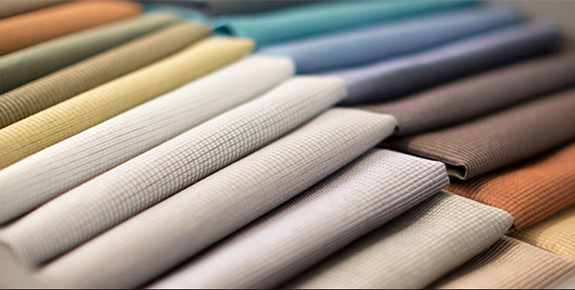

Laser Cutting Fabric: Choose the Right Machine and Configuration
Fabric laser cutting machines have rapidly become a game changer across the textile and apparel industries—from fashion and functional clothing to automotive textiles, aviation carpets, soft signage, and home decor. These machines are fundamentally reshaping how manufacturers cut, engrave, and prepare fabric at scale.
So why are both established manufacturers and fast-growing startups choosing laser cutters over traditional cutting methods? The answer lies in precision, repeatability, and the ability to handle complex patterns without physical tooling—advantages that compound at production scale.
Laser cutting fabric is a contactless thermal process used to cut compatible textiles from a digital file. The result depends on the material composition, coatings, thickness, required edge, fabric width, feeding method, and machine configuration. Use this guide to determine whether laser cutting suits your fabric and which configuration your production requires.

- 01 Laser Fabric Cutter Structure
- 02 Is Your Fabric Suitable for Laser Cutting?
- 03 Choose the Working Width, Pattern Length, and Feeding Method
- 04 Compare Fabric Laser Cutter Configurations
- 05 What to Confirm in a Sample Test
- 06 Delivery, Training, and Quotation Requirements
- 07 Popular Laser Fabric Cutting Machines
- 08 What Our Clients Say?
- 09 FAQ
- 10 Videos
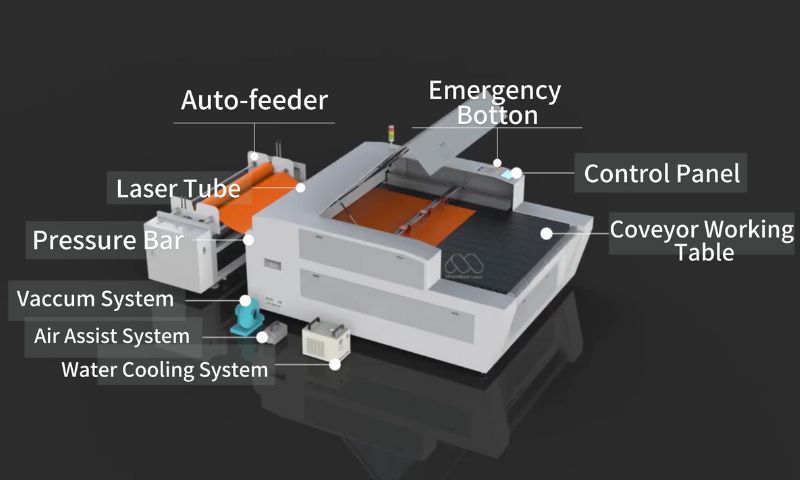
Laser Fabric Cutter Structure
With high automation, one person is good enough to cope with consistent fabric laser cutting work. Plus with a stable laser machine structure and long service time of laser tube (that can produce co2 laser beam), the fabric laser cutters can get you a long-term profit.
▶ Video Demonstration - Laser Cut Fabric
In the video, we used the laser cutter for cloth 160 with an extension table to cut a roll of canvas fabric. Equipped with the auto-feeder and conveyor table, the whole feeding and conveying workflow is automatic, accurate, and highly efficient. Plus with the dual laser heads, the laser cutting fabric is faster and enables mass production for apparel and accessories in a very short period. Check out the finished pieces, you can find the cutting edge is clean and smooth, the cutting pattern is accurate and precise. So customization in fashion and garment is possible with our professional fabric laser cutting machine.
Is Your Fabric Suitable for Laser Cutting?
Confirm the fiber composition, coatings, adhesives, dyes, printing method, structure, thickness, and required edge before approving a fabric for laser cutting. If the composition is unknown, request the relevant material safety and compatibility information. Extraction equipment does not make an unsuitable material acceptable for laser processing.
Choose the Working Width, Pattern Length, and Feeding Method
The machine format should match the fabric dimensions, pattern size, loading method, and collection requirements. Confirm the following specifications before choosing a configuration:
Fabric width: The actual width of the fabric roll.
Working width: The usable processing width of the laser cutting machine.
Pattern length: The length of a single pattern or continuous cutting file.
Feeding method: Cut pieces, roll material, automatic feeding, or continuous conveyor feeding.
Collection method: How the cut fabric and finished parts will be supported and collected after processing.
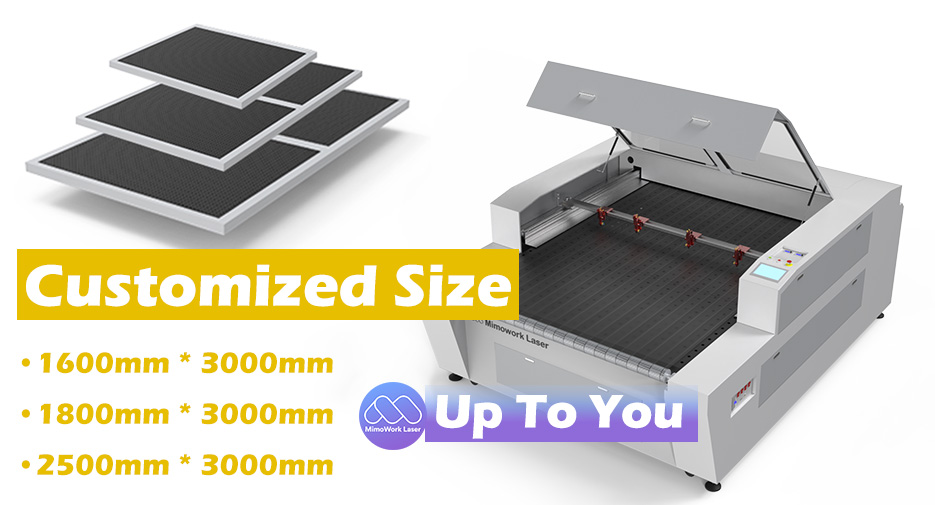
Select a working width that accommodates the widest production roll, including the space required for alignment and stable feeding. A fixed cutting table may suit individual fabric pieces, samples, and batch-loaded materials. Roll production normally requires a conveyor table and a compatible automatic feeder.
Do not treat working width and pattern length as the same specification. A machine may have sufficient width but still be unsuitable for a long continuous pattern. Confirm whether the design can be divided and repositioned, processed continuously, or requires a dedicated long-format machine.
The feeding and collection systems should also match the fabric’s weight, flexibility, surface condition, and production volume. Lightweight, stretchable, or slippery materials may require additional support to reduce wrinkles, misalignment, or uneven feeding. For continuous production, confirm the roll diameter and weight limits, feeding accuracy, conveyor configuration, and the space needed to collect finished parts without disturbing the cutting process.
Compare Fabric Laser Cutter Configurations
Compare configurations using the actual fabric, pattern size, loading method, recognition requirements, and production target. A larger or more complex configuration is not automatically the better choice.
| Configuration | How to compare |
|---|---|
| Working area | Confirm that the usable cutting area accommodates the largest fabric piece or pattern. |
| Maximum material width | Match it to the widest production roll and allow sufficient space for alignment and stable feeding. |
| Fixed or conveyor table | Choose a fixed table for cut pieces and batch loading. Choose a conveyor table for continuous roll processing. |
| Auto-feeder compatibility | Check the supported roll width, diameter, weight, feeding accuracy, and material tension requirements. |
| Solid or printed fabric recognition | Standard positioning may suit solid fabric. Printed or sublimated fabric may require a camera, registration-mark, or contour-recognition system. |
| Laser-source options | Compare available power options using sample quality and measured cycle time. Higher power is not automatically more suitable. |
| Multiple-head compatibility | Consider multiple heads only when repeated layouts and sufficient working width allow them to improve output. |
| Nesting software | Compare file compatibility, material utilization, automatic layout functions, and suitability for repeated production. |
| Marking options | Confirm whether cutting, marking, labeling, or identification must be completed in the same workflow. |
| Collection options | Compare extension tables, collection areas, and winding or sorting methods according to part size and production flow. |
Do not compare machines only by power, maximum speed, or working area. Shortlist suitable configurations first, then test them using the same material, design file, edge requirement, and production quantity. Compare the finished quality, complete cycle time, material use, loading requirements, and total system cost before making a selection.
What to Confirm in a Sample Test
Confirm the fiber composition, coatings, adhesives, dyes, printing method, structure, thickness, and required edge result. Test the actual production material before approving the process.
If the composition is unknown, request the material safety data and machine compatibility information. Extraction equipment does not make an unsuitable material acceptable for laser processing.
| Test item | What to confirm |
|---|---|
| Production material | Test the exact composition, coating, finish, and printed or unprinted material used in production. |
| Thickness or layers | Use the actual material thickness and required number of layers. |
| Dimensional tolerance | Measure the finished part against the required dimensions and tolerance. |
| Cut-through and edge quality | Confirm complete cutting and whether the edge meets the required finish. |
| Heat-affected defects | Check for yellowing, melting, hardening, residue, or other unacceptable changes. |
| Feeding stability | Confirm that the fabric feeds consistently without wrinkles, misalignment, or interrupted production. |
| Printed-fabric recognition | Check contour alignment and recognition consistency across the production area. |
| Complete production cycle | Measure loading, positioning, cutting, unloading, inspection, and necessary finishing time. |
| Cost per acceptable part | Calculate the complete production cost based on accepted parts rather than machine speed alone. |
Approve the configuration only when the sample test meets the required quality, production capacity, and acceptable cost per finished part.
Delivery, Training, and Quotation Requirements
Before placing an order, confirm what the quotation includes, what the buyer must prepare, and how the machine will be delivered, installed, tested, and supported.
Brief Intro - Laser Fabric Cutter Structure
Machine and options: Confirm the machine model, working area, laser-source option, cutting table, feeder, recognition system, software, marking equipment, multiple-head configuration, and collection system included in the quotation.
Fume Extraction, cooling, and air assist: Identify which systems are included and confirm their specifications, installation requirements, and required connections.
Electrical and installation conditions: Confirm the voltage, phase, power capacity, grounding, ventilation, access space, environmental conditions, and unloading requirements.
Software and file compatibility: Check supported file formats, operating-system requirements, nesting functions, software licences, updates, and any additional charges.
Packaging, shipping, and delivery: Confirm the packaging method, shipping terms, destination, unloading responsibilities, insurance, taxes, and costs excluded from the quotation.
Installation and acceptance: Define who will install and commission the machine, which materials and files will be used for testing, and the acceptance criteria.
Training: Confirm whether training covers machine operation, file preparation, material loading, safety, routine maintenance, and basic troubleshooting.
Warranty and support: Request the current written policy covering the warranty period, included and excluded items, remote support, replacement parts, on-site service, and spare-parts availability.
Information to Provide for a Quotation
Provide the following information so the supplier can recommend and price the appropriate configuration:
Material name and exact composition
Coatings, adhesives, finishes, or printing method
Material thickness and required number of layers
Fabric or roll width
Roll diameter and weight
Maximum pattern dimensions
Solid, printed, or sublimated fabric
Required recognition or positioning method
Cutting files, drawings, photos, or physical samples
Required cut-through and edge result
Expected order volume and target production cycle
Installation destination and available electrical supply
Required feeder, software, marking, collection, or automation options
Delivery schedules, warranty coverage, service availability, and included costs may vary by configuration and destination. Confirm these items in the current written quotation and applicable policy before placing the order.
Popular Laser Fabric Cutting Machines
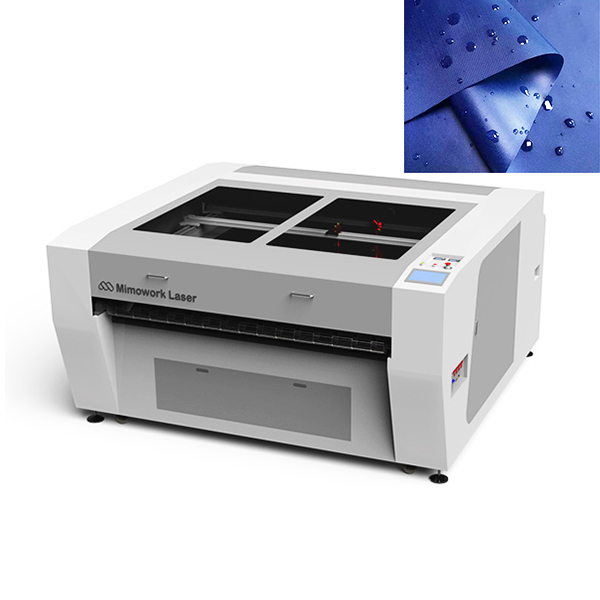
Standard Laser Cut Machine for Fabric
• Laser Power:
100W / 150W / 300W
• Working Area (W × L):
1600mm × 1000mm (62.9″ × 39.3″)
If you’re in the business of apparel, leather shoes, bags,
home textiles, or upholstery, investing in a Fabric Laser
Cut Machine 160 is a fantastic decision. With a working size
of 1600mm by 1000mm, it is designed to accommodate a range
of fabric pieces and roll materials.
Thanks to its auto-feeder and conveyor table, the machine
supports automatic feeding and continuous processing.
Material compatibility and the required cutting result
should be confirmed through a sample test.
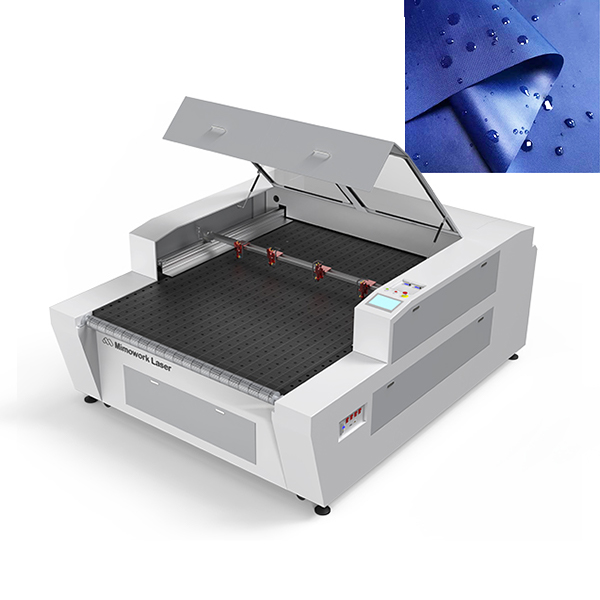
Textile Laser Cutting Machine
• Laser Power:
150W / 300W / 450W
• Working Area (W × L):
1800mm × 1000mm (70.9″ × 39.3″)
• Collection Area (W × L):
1800mm × 500mm (70.9″ × 19.7″)
The 1800mm working width can accommodate wider fabrics than
a standard 1600mm configuration. Its conveyor table supports
continuous roll processing, while the collection area
provides space for handling finished parts.
Multiple-head availability and expected output should be
evaluated using the actual pattern layout, material, and
measured production cycle.
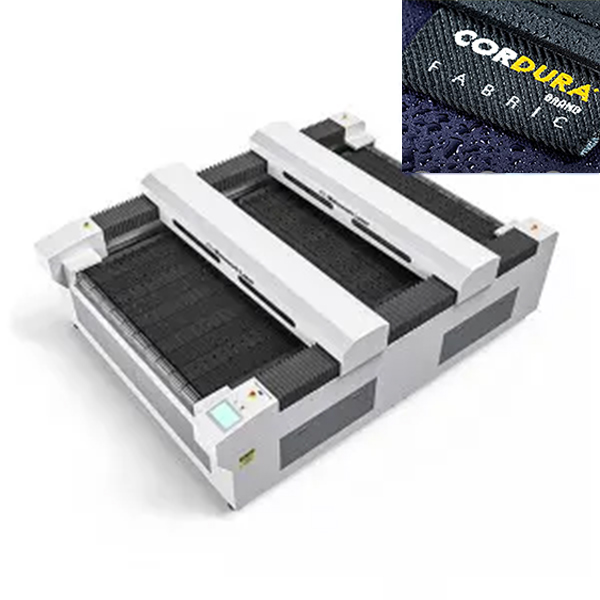
Industrial Laser Cutter for Fabric
• Laser Power:
150W / 300W / 450W
• Working Area (W × L):
1600mm × 3000mm (62.9″ × 118″)
The 1600mm × 3000mm working area is intended for larger
fabric pieces and patterns that require more processing
length. Its suitability for regular, technical, or composite
textiles depends on the exact composition, coating,
thickness, and required edge result.
Confirm the appropriate power option, feeding method, and
production capacity through a sample test using the actual
production material.
From Spec to Reality
(The Perfect Fit for Your Production)
What Our Clients Say?
A Client Working with Sublimation Fabric, Said:
From a Client Making Cornhole Bags, Said:

Questions about Laser Cutting Fabric, Textile, Cloth?
When we say fabric laser cutting machine, we are not simply talking about a laser cutting machine that can cut fabric, we mean the laser cutter that comes with a conveyor belt, auto feeder and all other components to help you cut fabric from roll automatically.
Compared with investing in a regular table-size CO2 laser engraver that’s mainly used for cutting solid materials, such as Acrylic and Wood, you need to choose a textile laser cutter more wisely. There are some common questions from fabric manufacturers.
• What working width should I choose?
• When is an auto-feeder required?
• Does printed fabric require camera recognition?
• What should be tested before purchasing?
Is the Laser a Perfect Fit for Your Production & Business?
Our Laser Experts are On Standby!
— Videos Display —
Advanced Laser Cut Fabric Technology
1. Auto Nesting Software for Laser Cutting
2. Extension Table Laser Cutter - Easy & Time-Saving
3. Laser Engraving Fabric - Alcantara
4. Camera Laser Cutter for Sportswear & Clothing
Learn more about the technology of laser cutting fabrics and textiles, check out the page: Automated Fabric Laser Cutting Technology >
Want to See Demos of Your Production & Business?
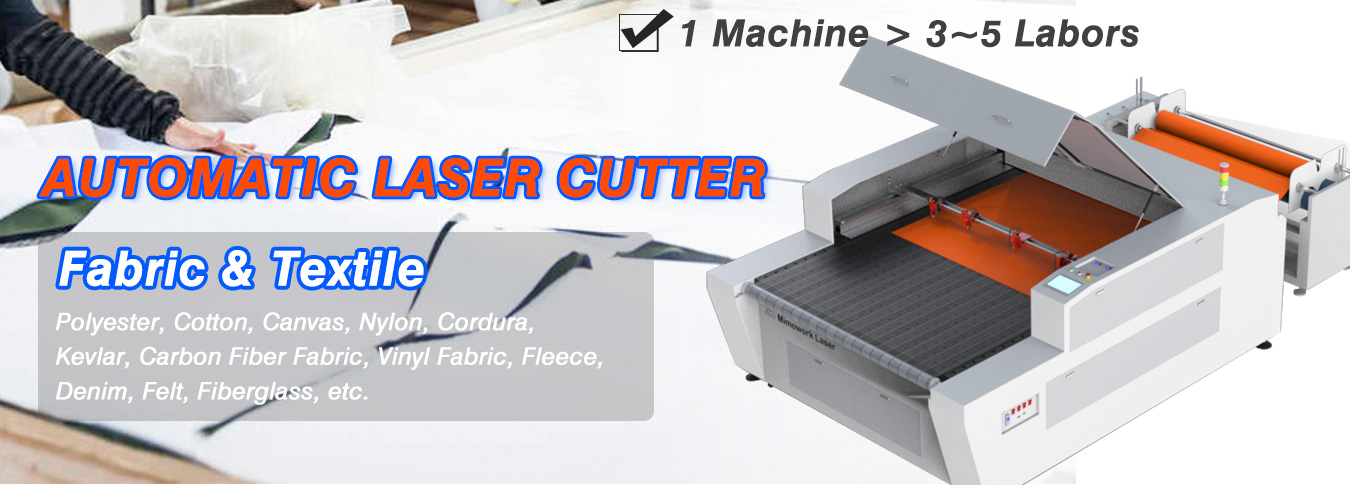
Professional Laser Cutting Solution for Fabrics (Textiles)

As new fabrics with unique functions and advanced textile technologies emerge, there's a growing need for more efficient and flexible cutting methods. Laser cutters really shine in this area, offering high precision and customization. They're widely used for home textiles, garments, composite materials, and even industrial fabrics.
One of the best things about laser cutting is that it’s contactless and thermal, which means your materials stay intact and undamaged, with clean edges that don’t require any post-trimming.
But it’s not just about cutting! Laser machines are also fantastic for engraving and perforating fabrics. MimoWork is here to provide you with top-notch laser solutions to meet all your needs!
Related Fabrics of Laser Cutting
Laser cutting plays an important role in cutting natural and synthetic fabrics. With wide materials compatibility, natural fabrics like silk, cotton, linen cloth can be laser cut meanwhile retaining themselves non-damaged in intactness and properties. Besides that, the laser cutter featuring contactless processing solves a troublesome problem from stretched fabrics - fabrics distortion. Excellent advantages make laser machines popular and the preferred choice for clothing, accessories, and industrial fabrics. No contamination and force-free cutting protect material functions, as well as create crispy and clean edges due to thermal treatment. In the automotive interior, home textiles, filter media, clothing, and outdoor equipment, laser cutting is active and creates more possibilities in the whole workflow.